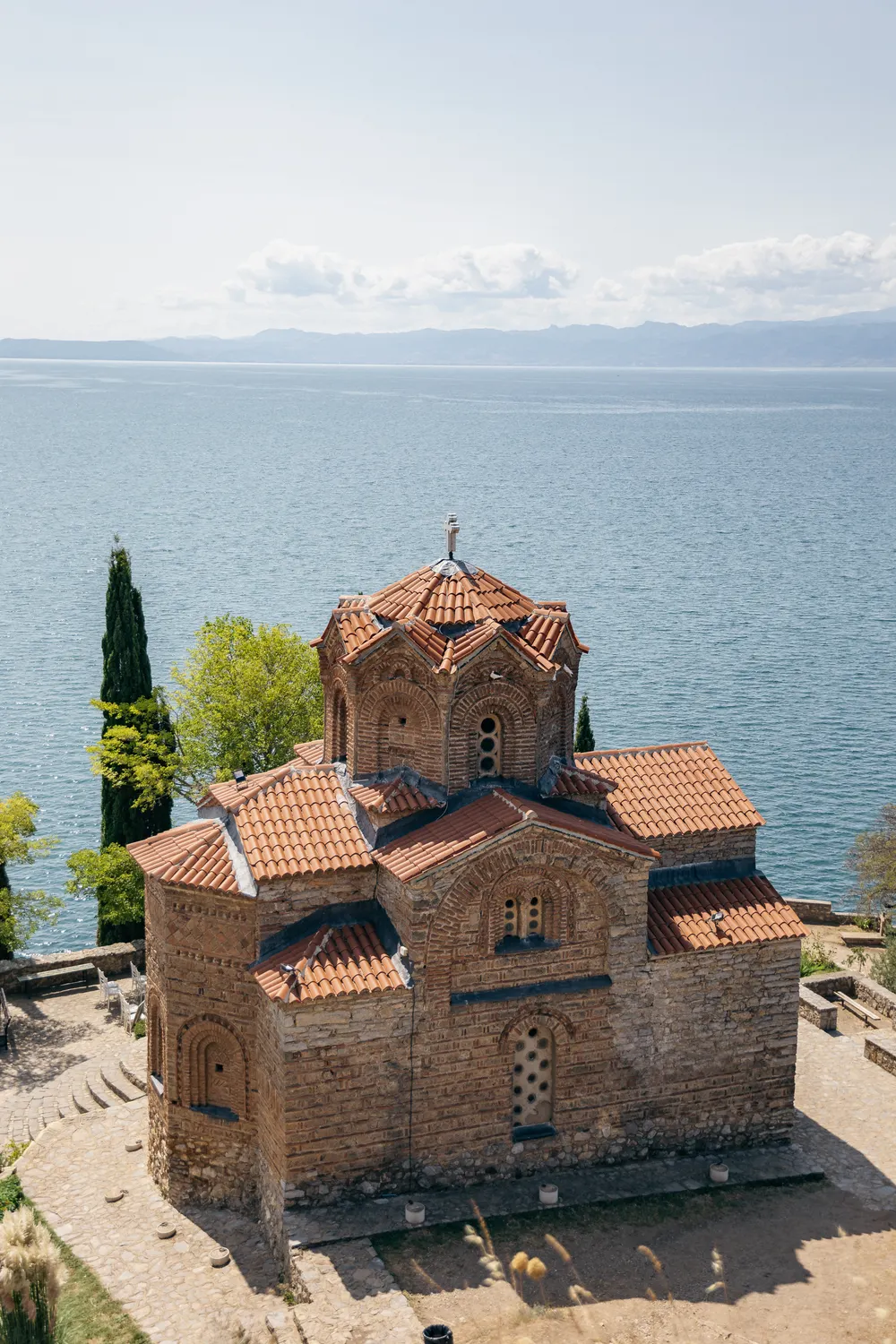
Church of St. John at Kaneo
A 13th-century Orthodox church situated on a cliff overlooking the lake, featuring a mix of Byzantine and Armenian architectural styles.
View from a boat during the late afternoon for perspective.

Lake Ohrid holds geological records that predate the Mediterranean's modern shoreline and archaeological evidence of human presence stretching back to Neolithic times. The water itself is a relic of the Pliocene epoch, and the settlements along its edge have witnessed Illyrian, Roman, Byzantine, and Slavic rule. This page maps the timeline from tectonic origins through contemporary UNESCO recognition.
Quick answer
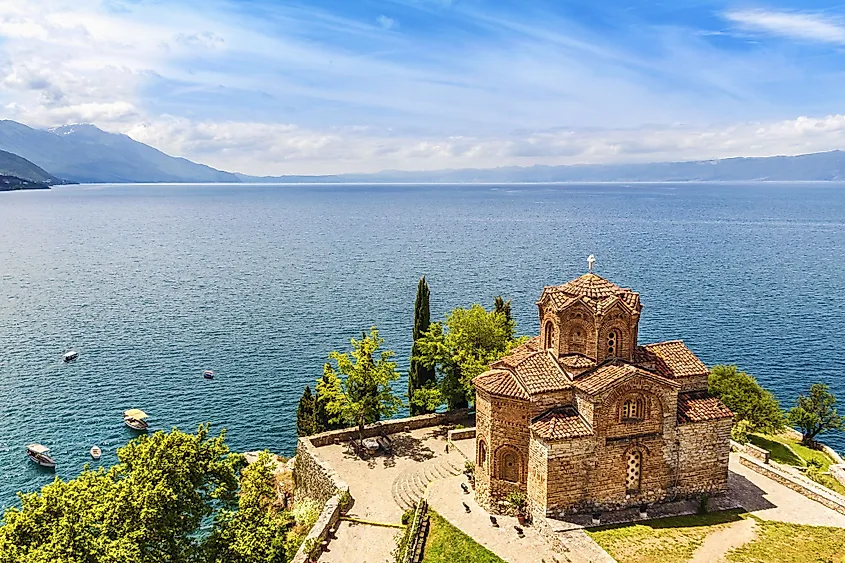
Lake Ohrid formed approximately 2 to 3 million years ago during tectonic shifts in the Balkan Peninsula, making it one of Europe's oldest continuously existing lakes. Human settlement began in the Neolithic period around 6000 BCE, with major historical phases including Illyrian fortifications, Roman colonization under Emperor Philip II, Byzantine ecclesiastical expansion in the 9th and 10th centuries, and Ottoman rule from the 14th to early 20th century. UNESCO inscribed the lake and its cultural landscape as a World Heritage Site in 1979.
Lake Ohrid is older than most European mountain ranges. Formed between two and three million years ago when tectonic forces carved a graben basin along the Dinaric-Hellenic fault line, the lake predates the glacial cycles that reshaped the continent's surface. Its depth—reaching 288 meters—and isolation allowed endemic species to evolve undisturbed, earning it the designation of a biological relict. The water chemistry, fed by underground karst springs rather than surface rivers, remains stable across millennia. Archaeological excavations at the Bay of Bones reveal Neolithic pile dwellings dating to 6000 BCE, where fishing communities built homes on wooden platforms above the waterline. Illyrian tribes fortified the hills above the eastern shore by the Bronze Age, constructing the citadel that would later anchor the city of Lychnidos. When Rome absorbed the region in the 2nd century BCE, Lychnidos became a waypoint on the Via Egnatia, the imperial highway connecting the Adriatic to Byzantium. Inscriptions and mosaics from this period remain visible in modern Ohrid's lower town. The lake's most concentrated historical layer belongs to the Byzantine centuries. Between 886 and 916 CE, Saint Clement of Ohrid and Saint Naum transformed the region into a center of Slavic literacy and ecclesiastical authority, founding monasteries and scriptoria that produced Cyrillic manuscripts. At its zenith, Ohrid claimed 365 churches—one for each day of the year—though fewer than thirty medieval structures survive. The Church of Saint John at Kaneo, perched on a limestone promontory, dates to the 13th century and offers the most photographed silhouette on the Balkan tourist circuit. Ottoman control from 1395 onward introduced mosques, bathhouses, and bazaar architecture, much of which coexists with Byzantine stonework in the old town. The 20th century brought border disputes between Greece, Bulgaria, and Yugoslavia, with the current boundary between North Macedonia and Albania established in 1949. UNESCO's 1979 designation recognized both natural and cultural heritage, a rare dual inscription that obligates both nations to coordinate conservation. Understanding the lake's history requires recognizing its layered identity—geological monument, archaeological site, ecclesiastical archive, and living borderland.
“At its zenith, Ohrid claimed 365 churches—one for each day of the year—though fewer than thirty medieval structures survive.”
Lake Ohrid formed between two and five million years ago during the Pliocene epoch, making it one of Europe's oldest continuously existing lakes. Tectonic forces created a deep graben basin along the border of present-day North Macedonia and Albania, eventually filling with water from surrounding mountain springs. The lake reached depths exceeding 288 meters, establishing conditions that allowed unique endemic species to evolve in isolation. By the time human settlements appeared along its shores, Lake Ohrid had already harbored distinct fauna found nowhere else on Earth. The region's recorded lake ohrid history begins with Illyrian tribes settling the shoreline before the fourth century BCE. In 229 BCE, the ancient city of Lychnidos—now Ohrid—was established on the northeastern shore, serving as a vital stop along the Via Egnatia trade route connecting the Adriatic to Byzantium. Roman engineers recognized the strategic and economic value of the deep freshwater basin. Early Christian communities later transformed the area into a spiritual center, with monasteries and churches constructed directly overlooking the water from the tenth century onward. The medieval period marked Lake Ohrid's prominence as a cradle of Slavic literacy and Orthodox scholarship. Saints Clement and Naum founded schools and scriptoria near the lake in the late ninth century, training scribes who produced liturgical manuscripts in the newly developed Glagolitic and Cyrillic alphabets. The Bay of Bones settlement, a reconstructed Bronze Age pile-dwelling village, now offers tangible evidence of prehistoric lake communities dating back three millennia. UNESCO inscribed Lake Ohrid as both a natural and cultural World Heritage Site in 1979, recognizing its dual significance. Today, visitors walking the cobbled lanes of Ohrid's old town encounter the Church of St. John at Kaneo perched on a cliff above the water, Byzantine frescoes inside the Church of St. Sophia, and Samuel's Fortress commanding views across the lake. The endemic Ohrid trout still inhabits the depths, and transparent spring-fed waters preserve the geological and cultural continuum that defines this ancient basin.
Lake Ohrid forms in a tectonic graben basin during the Pliocene epoch, becoming one of Europe's oldest lakes.
The ancient city of Lychnidos is founded on the lake's northeastern shore, serving as a key settlement along the Via Egnatia trade route.
Saint Clement of Ohrid establishes a monastery and school near the lake, advancing Slavic literacy and the use of the Cyrillic script.
Dozens of churches and monasteries are constructed around Lake Ohrid, making it a major center of medieval Orthodox Christianity.
UNESCO designates Lake Ohrid as a World Heritage Site for both its natural biodiversity and its cultural monuments.
Archaeologists reconstruct the Bay of Bones, a Bronze Age pile-dwelling settlement originally built on the lake around 1200 BCE.
The shores of Lake Ohrid are home to numerous landmarks that reflect the region's enduring cultural and architectural significance. These sites provide a physical connection to the past, visible from both the land and the water.
A 13th-century Orthodox church situated on a cliff overlooking the lake, featuring a mix of Byzantine and Armenian architectural styles.
View from a boat during the late afternoon for perspective.
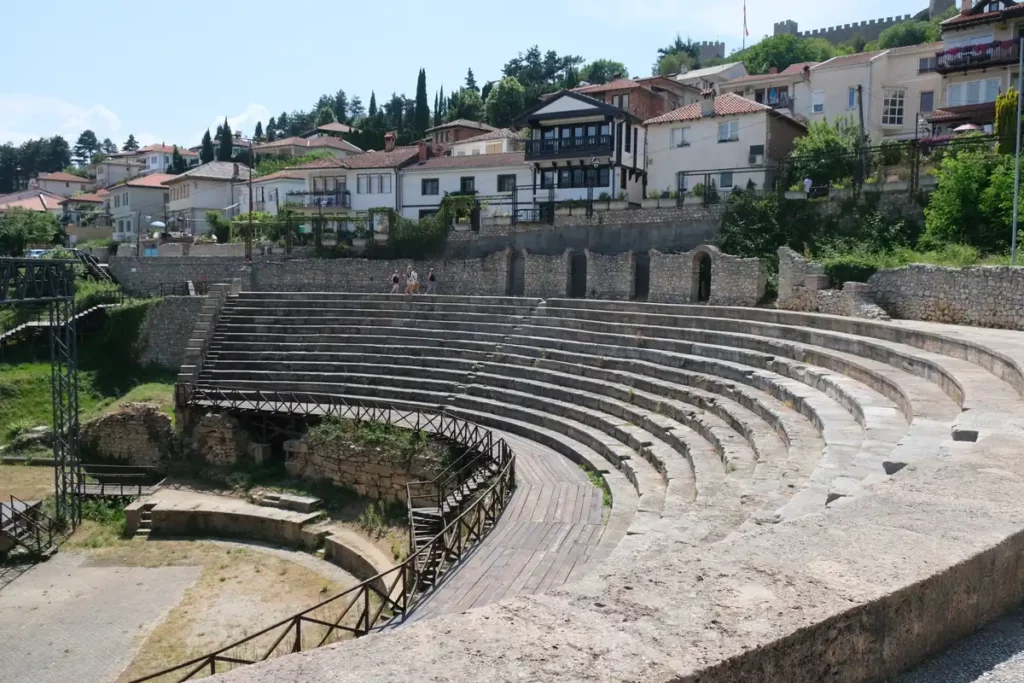
Constructed in the 2nd century BC, this Hellenistic-style theatre remains a central point for cultural events.
Visit the upper rows for a clear view of the lake.
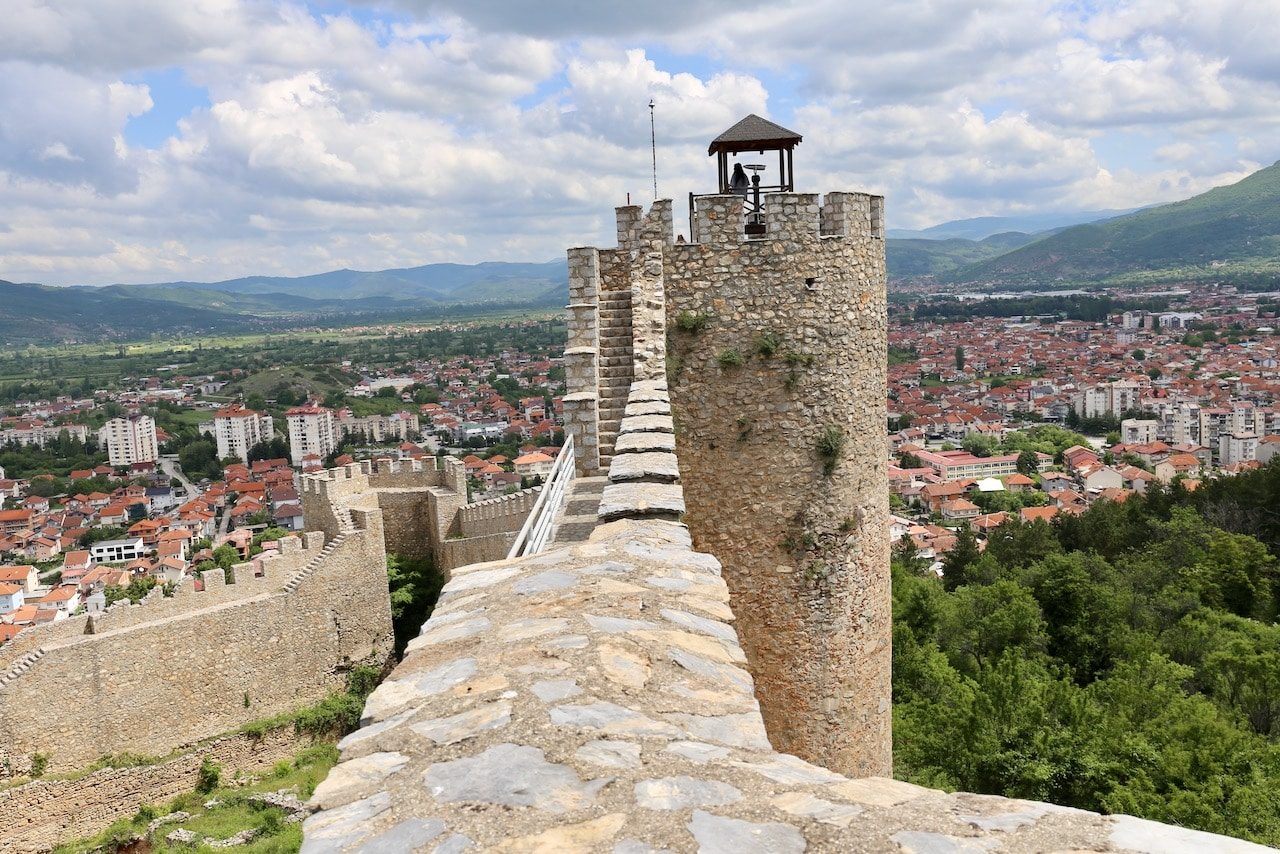
A historical fortification that dominates the Ohrid skyline, offering expansive views of the town and lake basin.
Walk the perimeter walls to see the defensive layout.
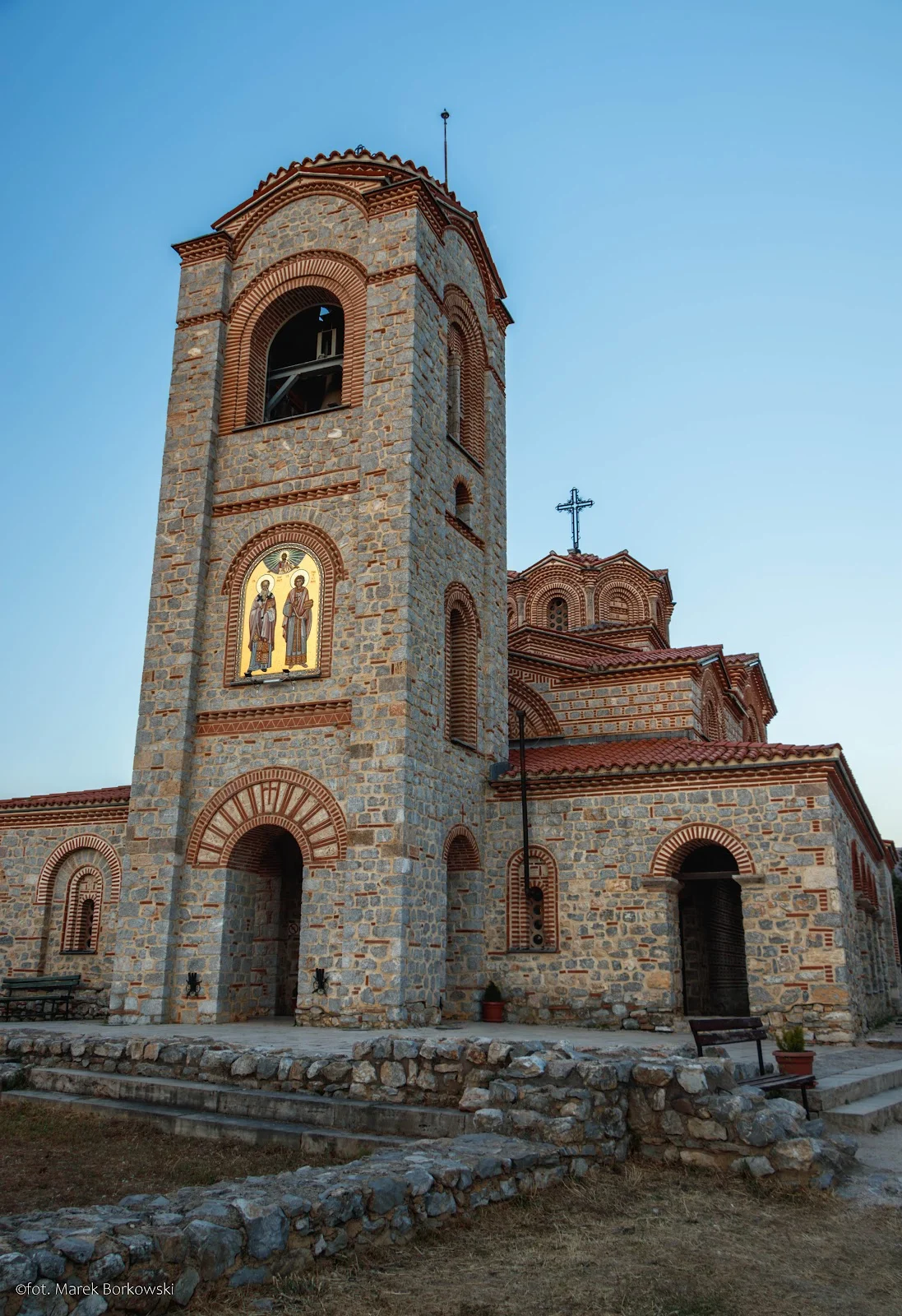
An archaeological site housing the reconstructed Church of St. Panteleimon and remains of an early university.
Observe the floor mosaics near the church entrance.
The period from May to June and September to October offers the most favorable balance of mild temperatures and historical site accessibility. For the quietest experience, plan your exploration during the early morning hours.
Mild, 18°C to 24°C
Ideal for walking between archaeological sites without peak summer heat.
Warm, 25°C to 30°C
Expect increased activity around lakeside monuments and higher local foot traffic.
Cool, 15°C to 22°C
Clear conditions provide high visibility for viewing historical architecture and landscapes.
—
Best arrival window: 07:00–10:00 — Best morning light for photography and lower crowds before peak afternoon activity.
Verdict: For a peaceful visit to the historical sites, arrive between 07:00 and 10:00 on a weekday during May or September.
Lake Ohrid is accessible to visitors throughout the entire week. The area remains open daily to accommodate exploration of its historical surroundings.
Everything you need to know about lake ohrid history
The lake ohrid history is deeply intertwined with ancient civilizations, serving as one of Europe's oldest and deepest lakes. Its shores have been inhabited since prehistoric times, fostering unique cultural and religious developments.
For those planning a trip, the best arrival window is 07:00–10:00 to enjoy the morning light and avoid larger crowds. This early start provides a calm atmosphere for photography and sightseeing.
There is an entrance fee of 0 MKD for the lake and surrounding public areas. Visitors can enjoy the natural scenery and public access points without any cost.
Recognized for both its natural and cultural value, the lake ohrid history helped secure its designation as a UNESCO site. The presence of numerous Byzantine churches and archaeological sites highlights its historical importance.
You can explore the surrounding landmarks by boat, which offers a unique perspective on the area. Please check the available booking options on our site to plan your water-based excursion.
Understanding the lake ohrid history provides context for the diverse architecture and archaeological findings found in the city of Ohrid. Many local traditions and fishing practices have remained relatively unchanged for centuries.
The lake and public areas are open daily from 00:00–23:59. This 24-hour accessibility allows visitors to plan their visits around their own schedules.
Labino Boat Trips
Read more GuideLake Ohrid Boat Ride Info
Read more GuideIs Lake Ohrid Worth Visiting
Read more GuideCan You Swim In Lake Ohrid
Read more GuideWhere Is Lake Ohrid
Read more Tickets & toursPrivate Boat Tour Lake Ohrid
Read more Tickets & toursLake Ohrid Boat Party
Read more